

Step 5 Regenerative design
“Ask not what nature can do for you. But what you can do for nature.”
-Nehis Osagie
For your solutions consider your local ecological context. Are you planning to do anything unnatural? Potentially introducing new species or molecules to the system? Operating outside of the climate and energy flows?
Identify the ecosystem services that are generated currently and the services that could be generated by your solution. You could also perform an ecosystem services assessment / Site-based assessment.
(Note how in the image below the different categories are all connected and sometimes overlapping)
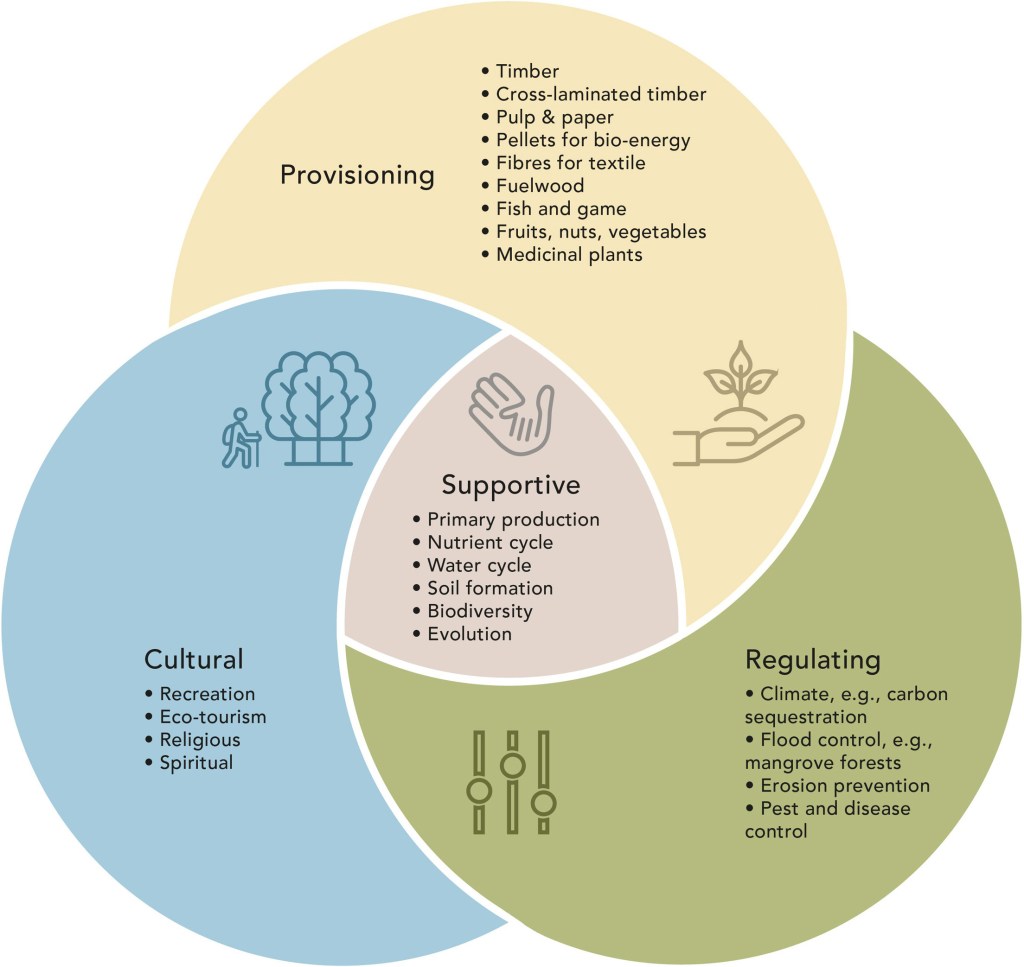
Image credits: Kramer, K., Bouriaud, L., Feindt, P. H., Van Wassenaer, L., Glanemann, N., Hanewinkel, M., … & Yousefpour, R. (2022). Roadmap to develop a stress test for forest ecosystem services supply. One Earth, 5(1), 25-34.
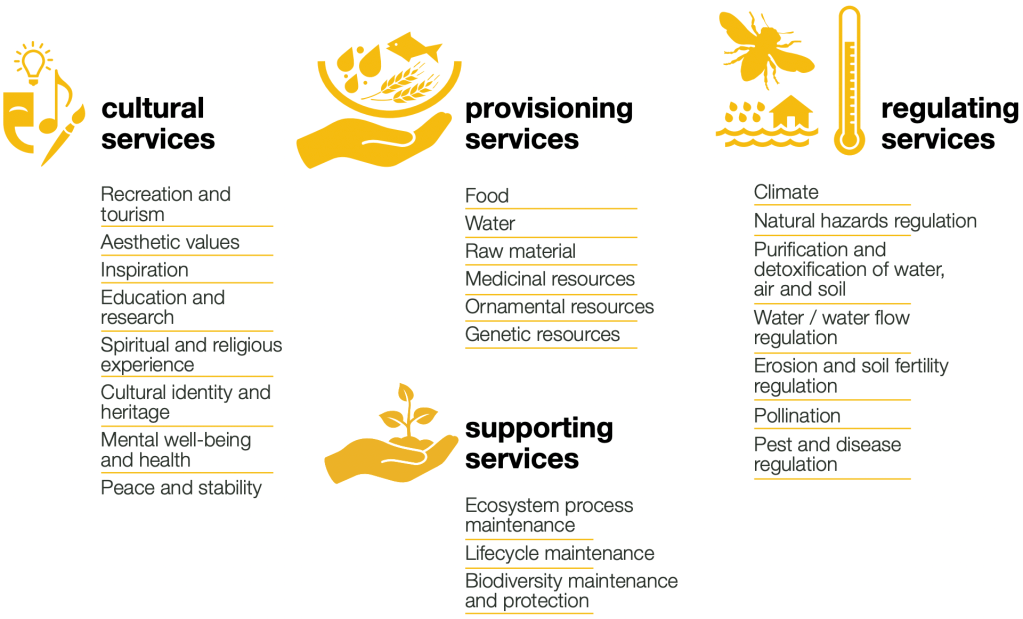
A few more examples of ecosystem services and how to identify the ones in your system. From the IUCN.
Embrace regenerative design principles. Move the goal away from simply being sustainable (doing no harm) to regenerative (positively impacting the environment).
Go over your list of ecosystem services. See if you can align your solution or tweak it to restore & enhance ecosystem functions in your system and potentially even generate new ecosystem services.Foster coevolution with natural systems and optimise resource flows. Aim to improve the resilience of your system with the solution.
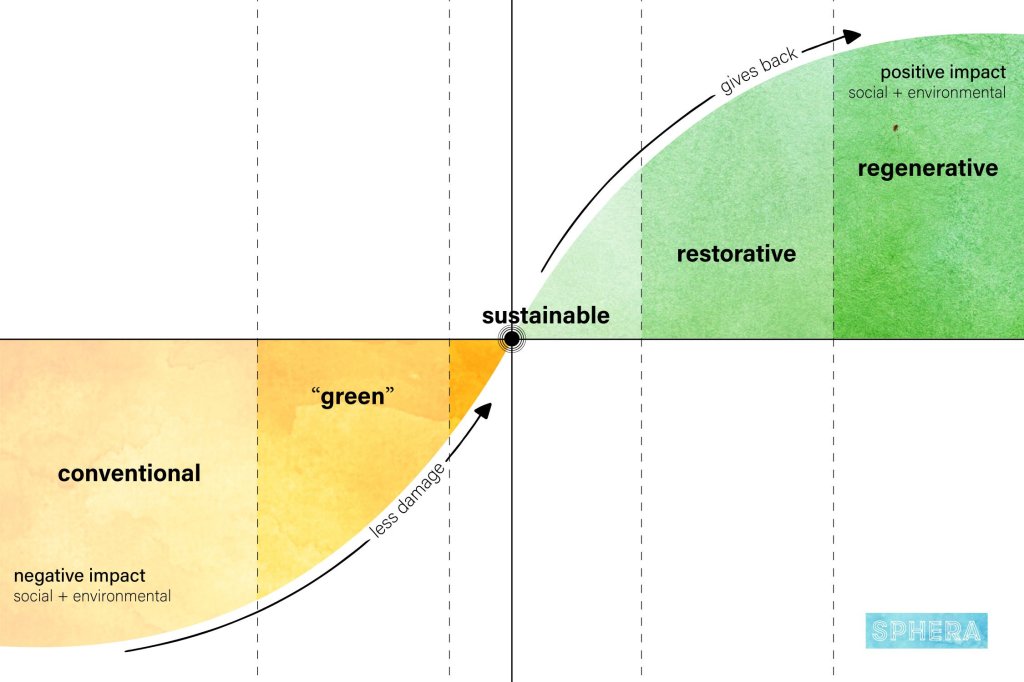
Regenerative design diagram from Sphera.
Adjust or adapt your best solutions to include adding or enhancing ecosystem services.
Note that sustainability is not bad, it is simply neutrality. We can aim higher and with the negative effects humans have had on the environment, we must aim for restorative and regenerative actions.
Next: Step 6.
Previous: Step 4.
 Ecosystem Biomimicry Guide