“Study the science of art. Study the art of science. Learn how to see. Realise that everything connects to everything else.”
-Leonardo Da Vinci
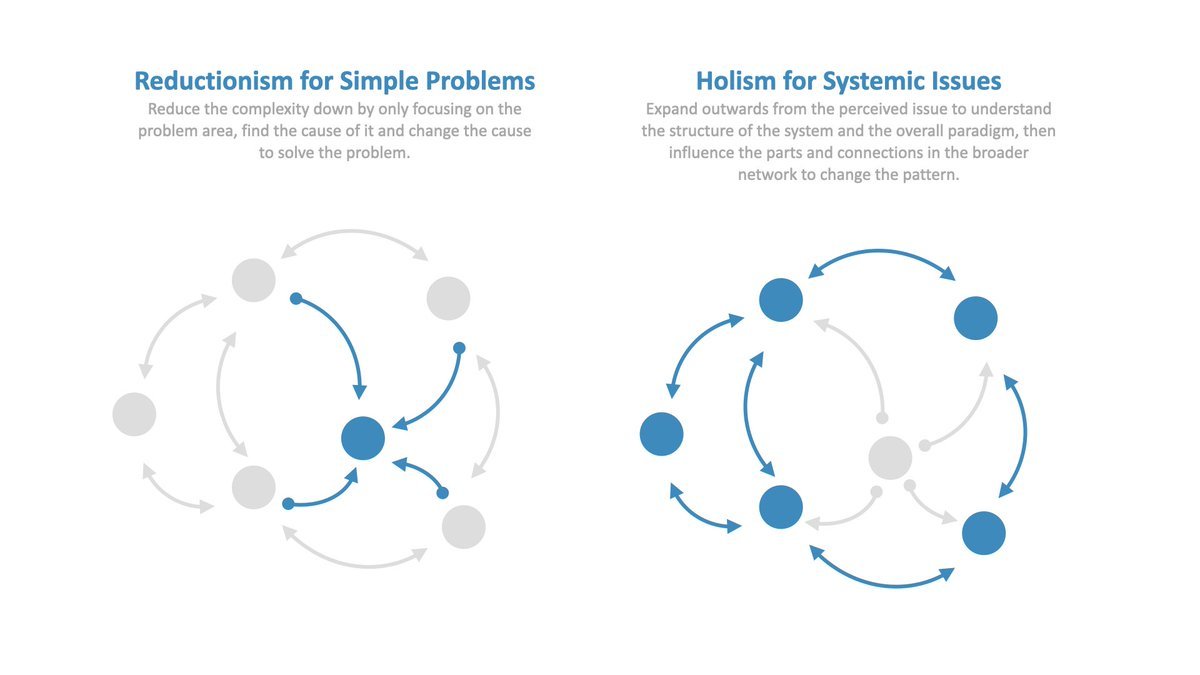
The first step to think holistically is to understand the context of the problem or the situation you are facing. What are the goals, constraints, assumptions, stakeholders, and impacts involved? How does the problem or the situation relate to your vision, mission, values, and strategy? How does it fit into the larger system or environment? By asking these questions, you can clarify the scope and boundaries of your thinking and avoid missing important factors or perspectives.
Image credits: Systems Innovation
The second step to think holistically is to explore multiple perspectives on the problem or the situation. How is someone else influenced by it? By seeking diverse and even contradictory views, you can challenge your own assumptions and biases, broaden your understanding, and discover new insights or opportunities. Assess the situation from different perspectives, and assume different roles and stances to challenge your assumptions surrounding the generated ideas. Step into the shoes of different demographic groups, professions and especially species (plants, animals etc.).
Good exercise could be making an empathy map, customer profile or combination. This technique is mostly used by companies for marketing and design. However, if we ignore the buying and marketing aspects, it could help to map out different perspectives and find common or conflicting views.
Generate alternatives and scenarios for solving the problem or addressing the situation. What are the possible options, outcomes, consequences, and implications of each perspective? Can you generate alternatives or adjustments that would satisfy all or at least more groups than before? How do they align with your goals, values, and criteria? How do they affect the different aspects of the problem or the situation and the stakeholders involved? How do they perform in different situations or under different assumptions?
Any information that was purely based on assumptions or even difficult to find out can be a great source of inspiration for questions to ask real people.
The best possible thing would be to interview and ask for feedback from different groups of people. The ideas have to be presented without framing it into a certain direction and the questions need to be as open as possible. The interviewer needs to try and remove as much bias as possible for steering the interviewee into a certain direction.
Try to come up with at least 3 alternatives for your solutions. Aim for at least 3 different filled in perspectives and try to get answers to questions by performing interviews.
It is impossible to ‘please’ everyone, but the more diverse perspectives you try to use and look at your system & solutions the better you can find the middle ground.



 Ecosystem Biomimicry Guide