

Step 1 System Analysis
It all starts with the understanding that your problem or project does not exist on its own in a vacuum. Rather, it is part of a larger system.
It is important to understand the structure, function, and dynamics of the system.
Start by making a simple map of the system surrounding your focus area. You can use an online tool, sticky notes or pen and paper.
From your initial map try to Identify key components, relationships, and feedback loops. Use color or highlights to mark these visually. Then write them out.
Make simple or complex visualisations of your key components, relationships and feedback loops. You can use a mental model example, like the iceberg model or a causal loop.
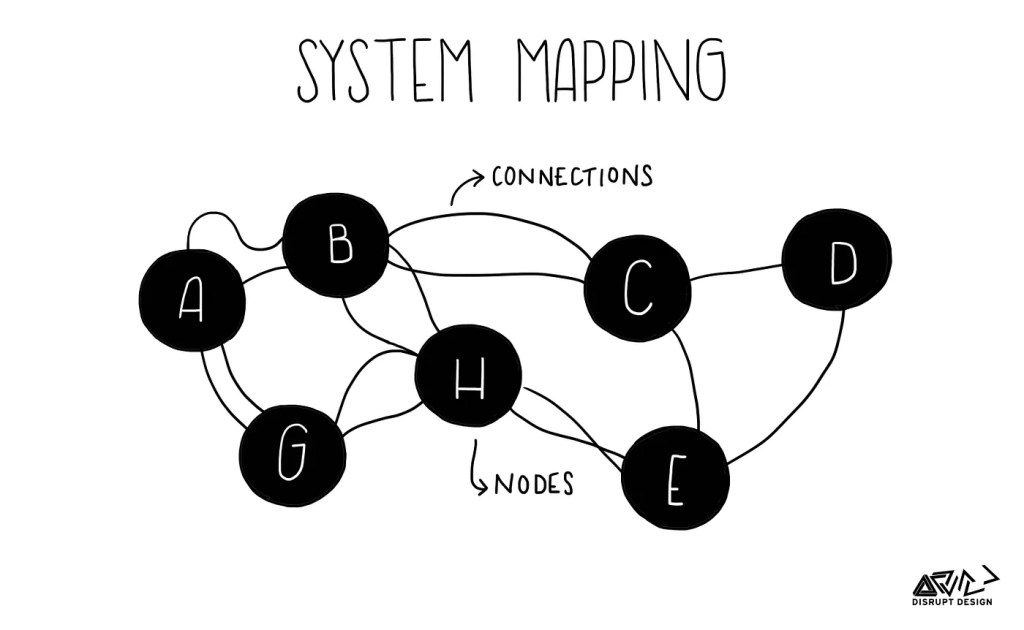
Use your new understanding to make a new more detailed map.
Take a look at the systems archetypes to understand system dynamics. Note down the archetype(s) you think best fit your system with a description of why.
Now define the local context on different levels. Ecologically (biomes/ biomes and climate region, socially, technologically, geographically etc.
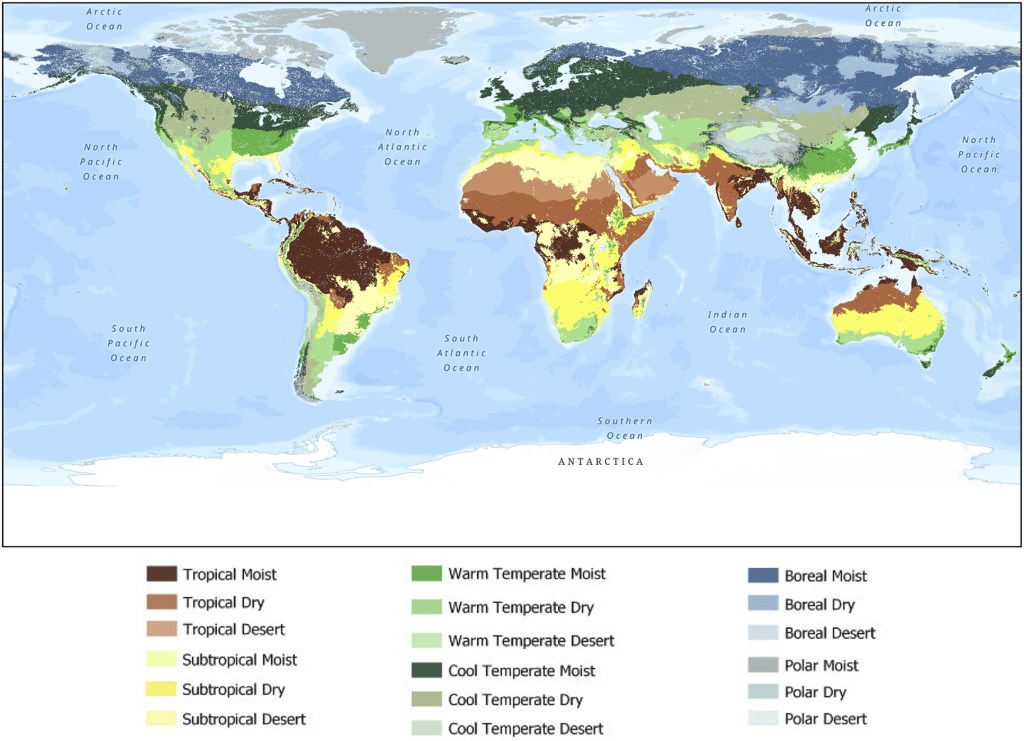
World Climate Regions map from Sayre, R., Karagulle, D., Frye, C., Boucher, T., Wolff, N. H., Breyer, S., … & Possingham, H. (2020). An assessment of the representation of ecosystems in global protected areas using new maps of World Climate Regions and World Ecosystems. Global Ecology and Conservation, 21, e00860.
To finish up step 1 use all the knowledge so far to make a complexity map.
& try to write a 5-sentence story of place/problem statement. That captures the essence of the project.
It will be important to try and keep your map(s) and story of place statement saved somewhere throughout the process.
Next: Step 2.
 Ecosystem Biomimicry Guide